.png?width=48&height=48&name=COACH%20SHELLY%20Course%20Designer%2c%20Author%20and%20Mentor%20(1).png)
1. Lift, split and replant your perennials
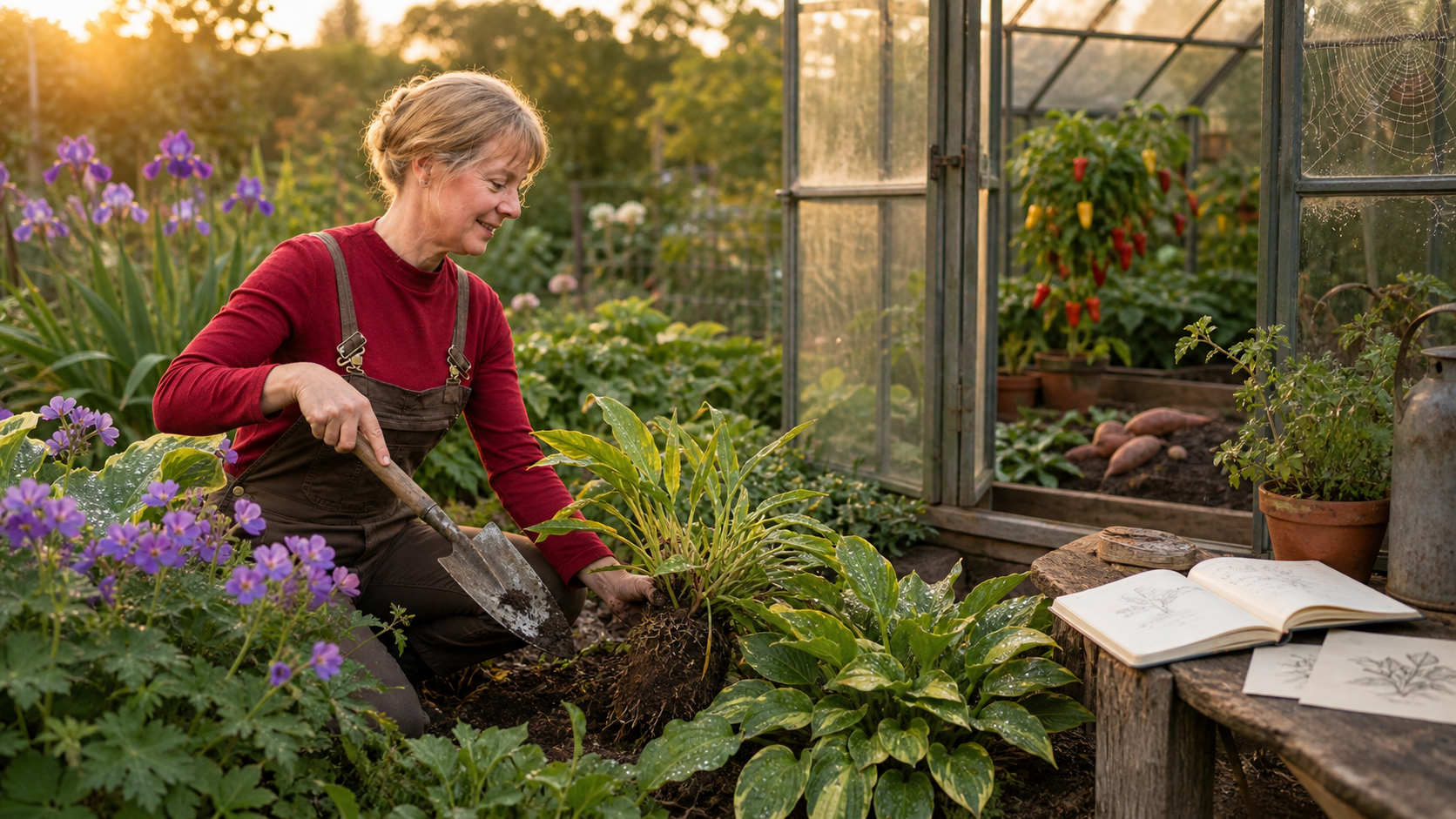
Hostas, hardy geraniums and irises all get bigger and bossier every year. Now is the ideal time to dig a clump up, split it into pieces with a spade or two forks back to back, and replant the best of it. If the middle has gone woody or died out, throw that bit away — the young outer growth is what you want.
The soil is still warm, so the new divisions get their roots down well before winter. And you end up with spare plants for free — fill a gap, or give them away.
"Water them in properly after splitting, even if rain is forecast. It settles the soil round the roots — that's what makes the difference."
.png?width=1448&height=1086&name=Untitled%20design%20(70).png)
2. Move whatever isn't working
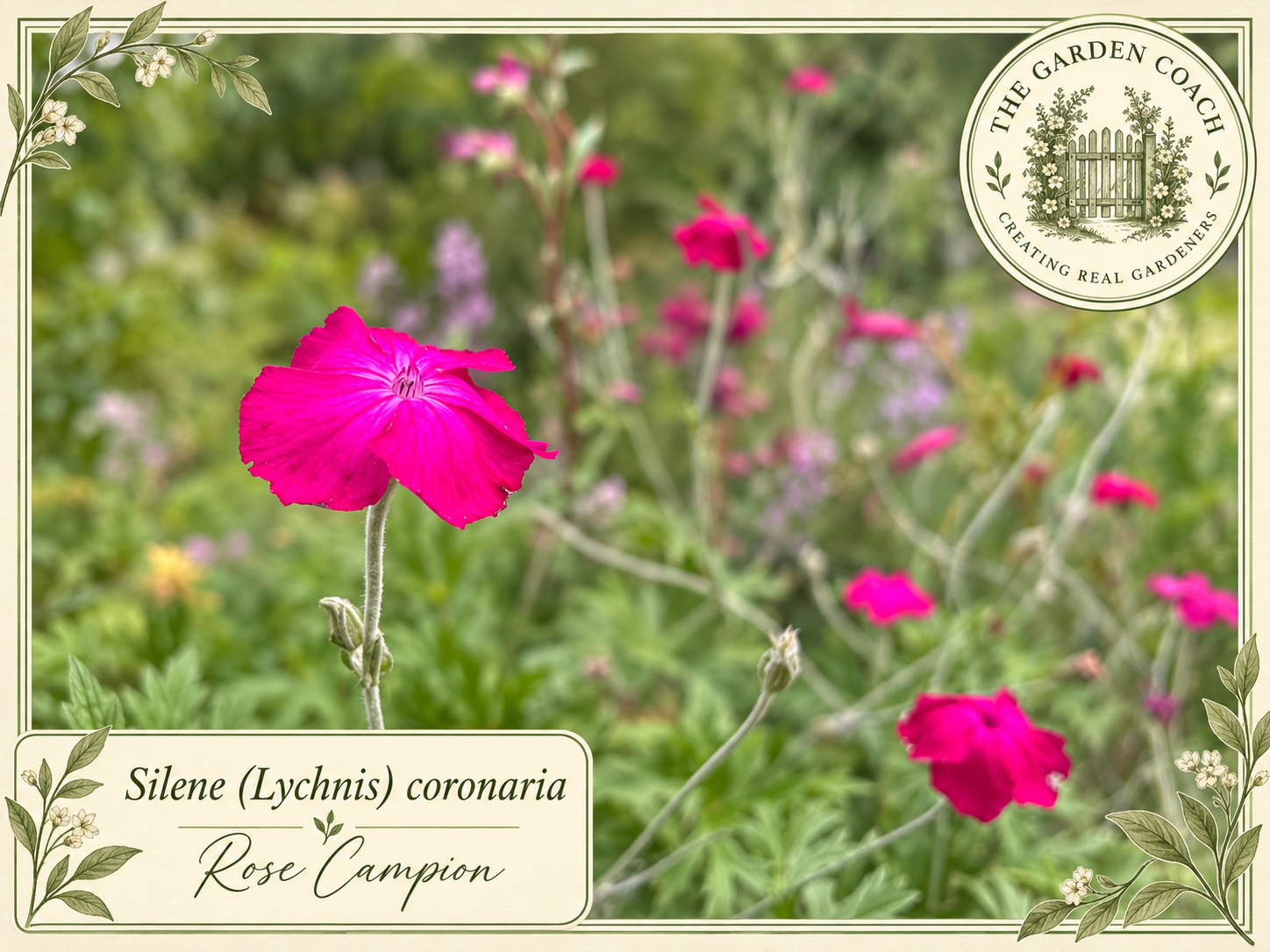
Walk round with fresh eyes and note anything that's sulking, swamped or simply in the wrong place. In Rebeccah's garden it's an actaea and a sanguisorba planted too close together — both fighting for the same room, neither looking its best.
Plants are far more forgiving than people expect. Lift, give them the space or the light they've been asking for, and next year they'll show you they were worth keeping.
.png?width=1448&height=1086&name=Untitled%20design%20(71).png)
3. Plant now — and let the plants do the weeding
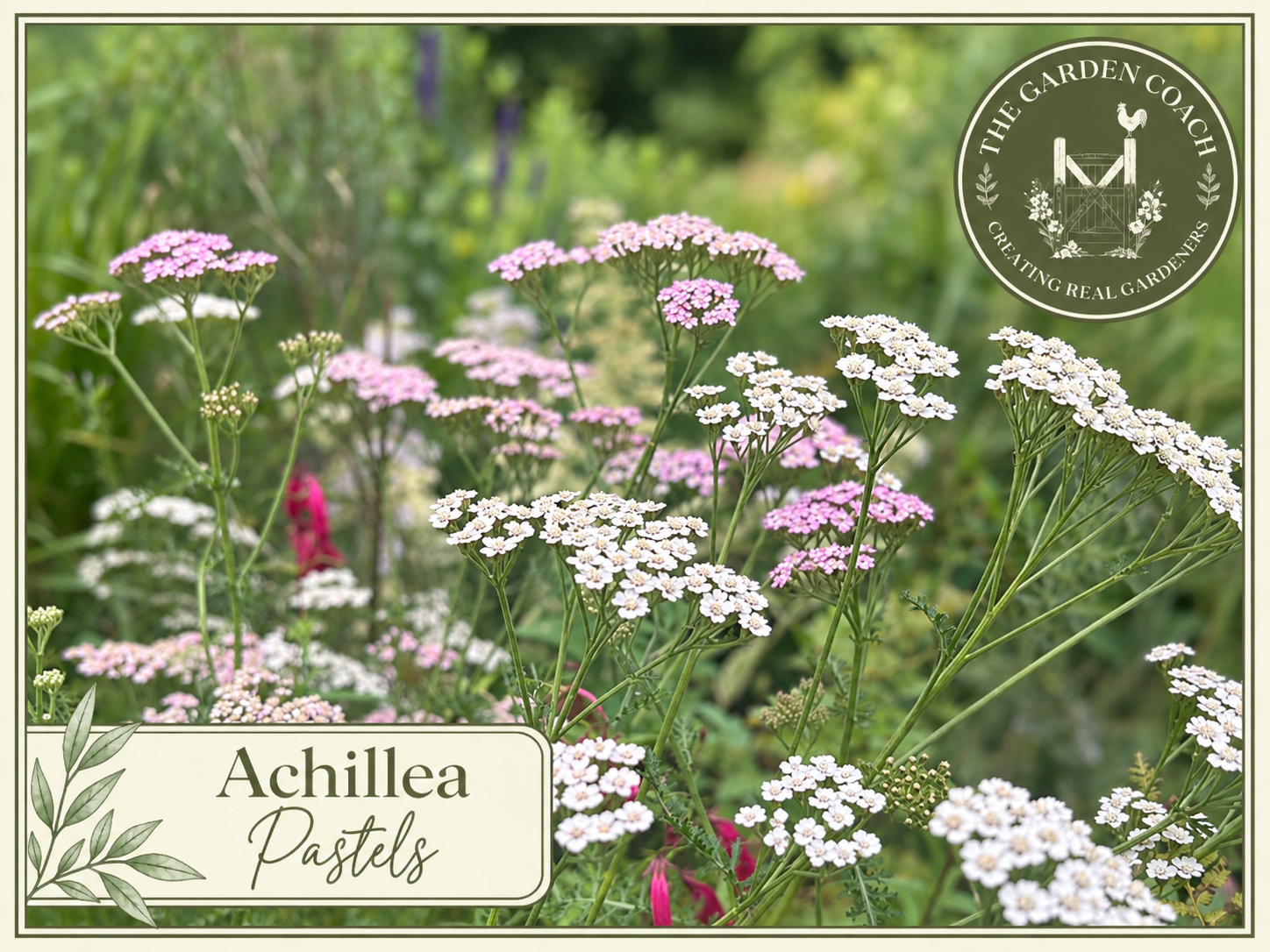
Shrubs go in happily this month while the ground is warm and damp. So do ground-coverers like ajuga and lamium, which knit together over bare soil and leave weeds nowhere to start. It's the cheapest weed control there is.
Keep the hoe moving in the meantime. Ten minutes across dry soil on a good day beats an hour on your knees in October.
4. Seeds and bulbs for spring
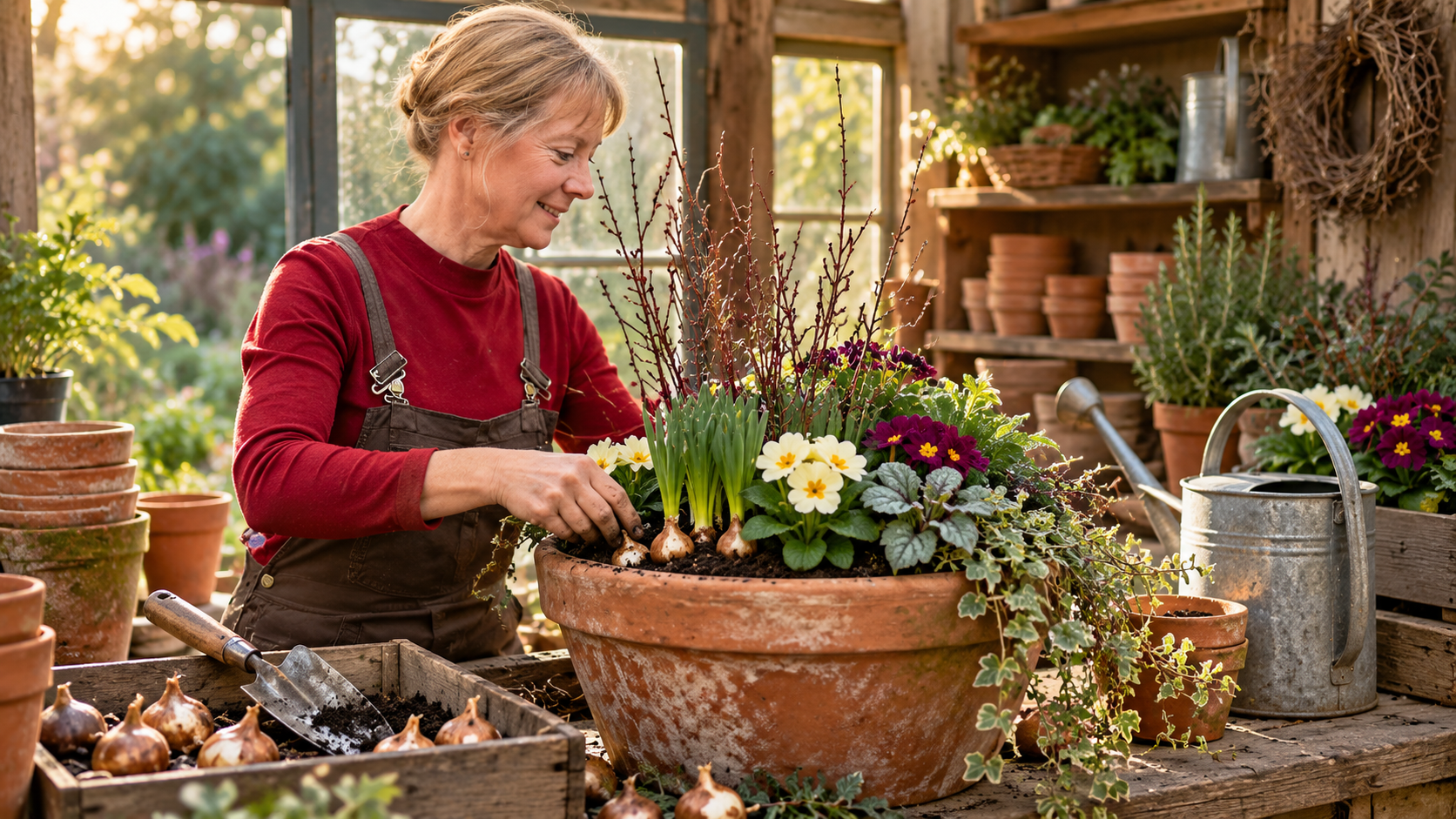
Sow hardy annuals and perennial seed now — foxgloves are a good place to start — and you'll have strong young plants ready to flower early next year. Spring bulbs go in this month too: narcissus and alliums both want planting while there's warmth left in the soil.
Tulips are the exception. Hold those back until November or December — planting them into warm soil invites fungus, and a cold spell does them nothing but good.
Bulbs now. Tulips later. Write it on the bag when you buy them.
5. Sort the greenhouse before you need it
Give the glass a clean, wash out the old pots and clear the staging while the weather still lets you work with the door open. Rebeccah leaves a few spiders' nests where they are — they've earned their winter lodgings, and they'll deal with next year's pests for you.
Bring in anything frost-tender in pots, and take cuttings while you're at it — pelargoniums and roses both root readily now, so next summer's plants cost you nothing.
Under glass she's still picking peppers, chillies and aubergines, with an experimental crop of sweet potatoes to dig up. Worth trying yourself next year.
.png?width=1448&height=1086&name=Untitled%20design%20(67).png)
6 Get a notebook out for next year
September is when the garden tells you the truth about itself. Rebeccah keeps a notebook going through the month — what failed, what needs moving, what she wants to try. This year's entry is an overgrown corner to clear for a new greenhouse, with soil beds inside for vegetables and cut flowers rather than pots.
You don't need a plan for the whole garden. One project, written down while you can still remember why it matters, is plenty.
.png?width=1448&height=1086&name=Untitled%20design%20(68).png)